Hi, I'm John, the DevOps team lead at Spacetime. On October 3–4, I headed to Ann Arbor for MHacks 2026, the University of Michigan's student hackathon. We sponsored a prize track, helped students get started with Spacetime, and got to see what they could build in a weekend.
I came home impressed. Our winners ranged from a surgical training simulator to a food-waste dashboard to a collaborative video editor. But before any of that, there was a table to set up.
Saturday: Setting Up and Getting Started
My Saturday began at Pierpont Commons, setting up our display alongside the other sponsors. I quickly noticed that seemingly everyone else had thought to bring a custom-branded tablecloth. Adding that to the list for next time.
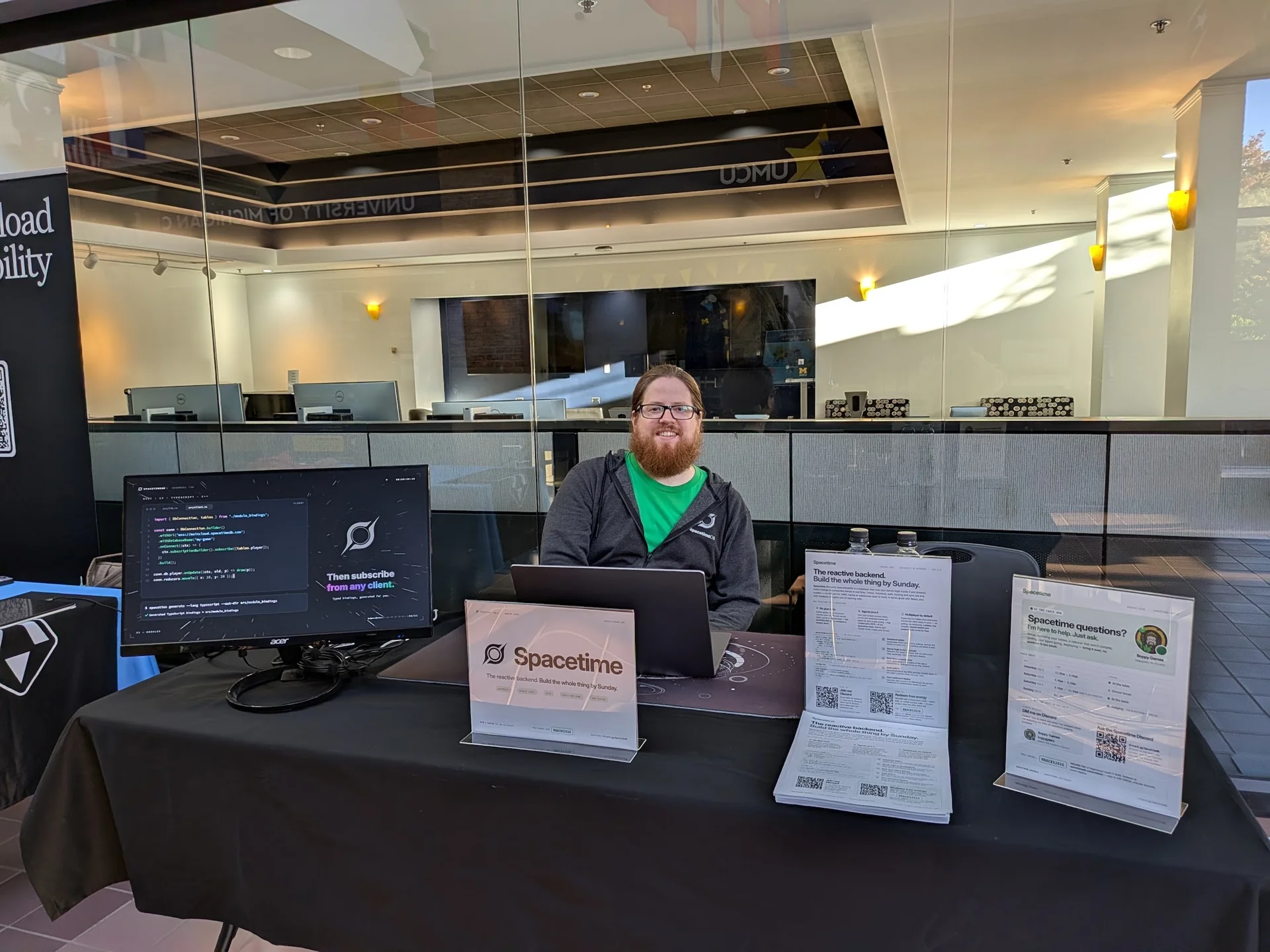
The tables lined a fairly narrow hallway, which felt spacious enough while we were setting up. That would change once the students arrived.
First, we headed to Central Campus for the opening talks. Eliot Frost and Judy Thelen, the founders of Beli, kicked things off with a fireside chat about building their company. What stuck with me was their willingness to experiment and move on quickly when something wasn't working: try broadly, learn fast, and put your effort behind the ideas that show promise. A useful mindset for a weekend with a very real deadline.
Telle Whitney followed with a talk about technology and communication. My biggest takeaway was that explaining an idea matters just as much as having one. Her story about pitching investors came back to the people behind a project: their ability to communicate, build trust, and make something happen.
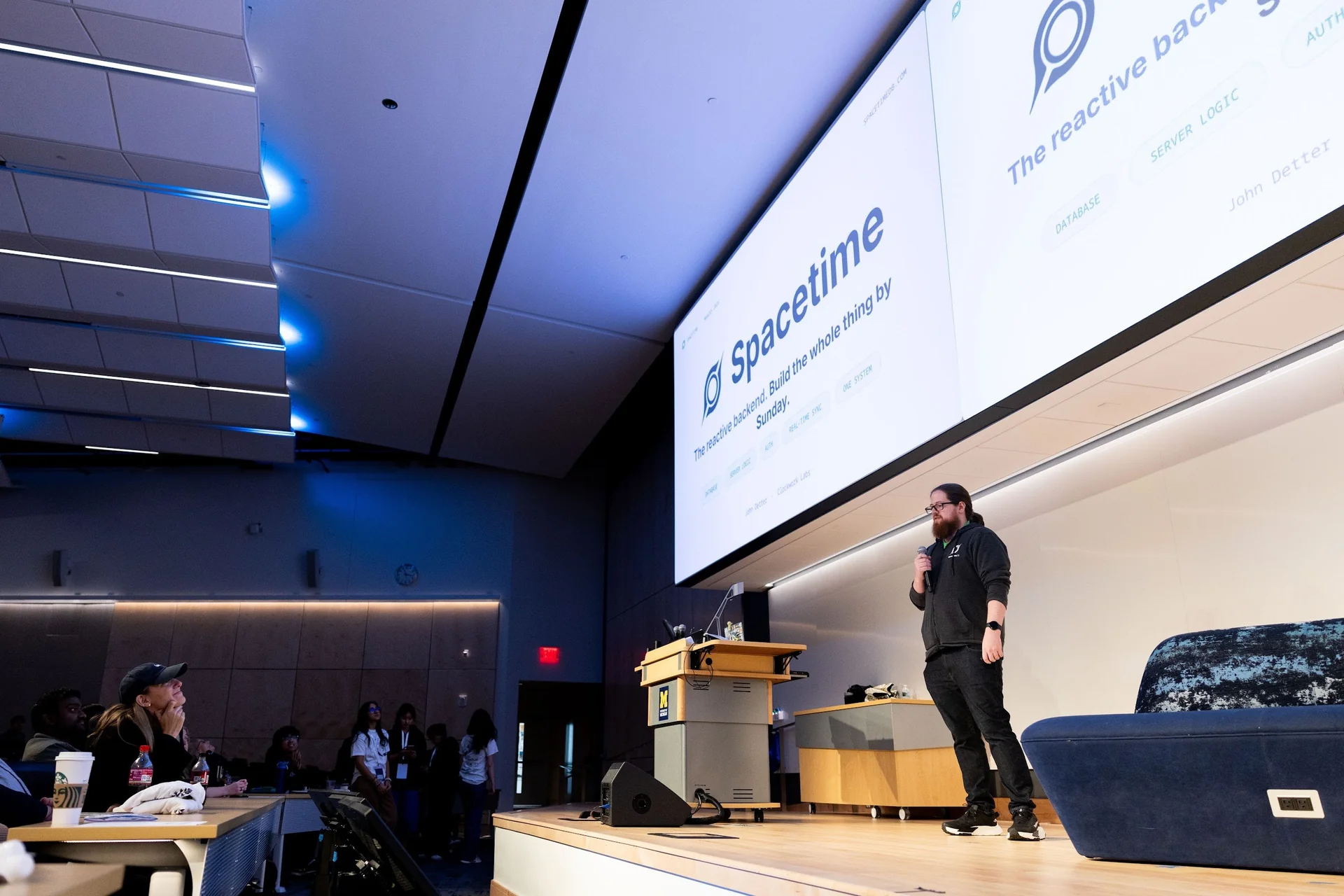
Then it was the sponsors' turn to introduce our prize tracks. For Best Use of Spacetime, we offered $1,000 for first place, $500 for second, and $200 for third. We deliberately left the theme open so students could pursue their own ideas and enter other tracks too. The key requirement was that Spacetime serve as the project's primary backend, with public source code available for judging.
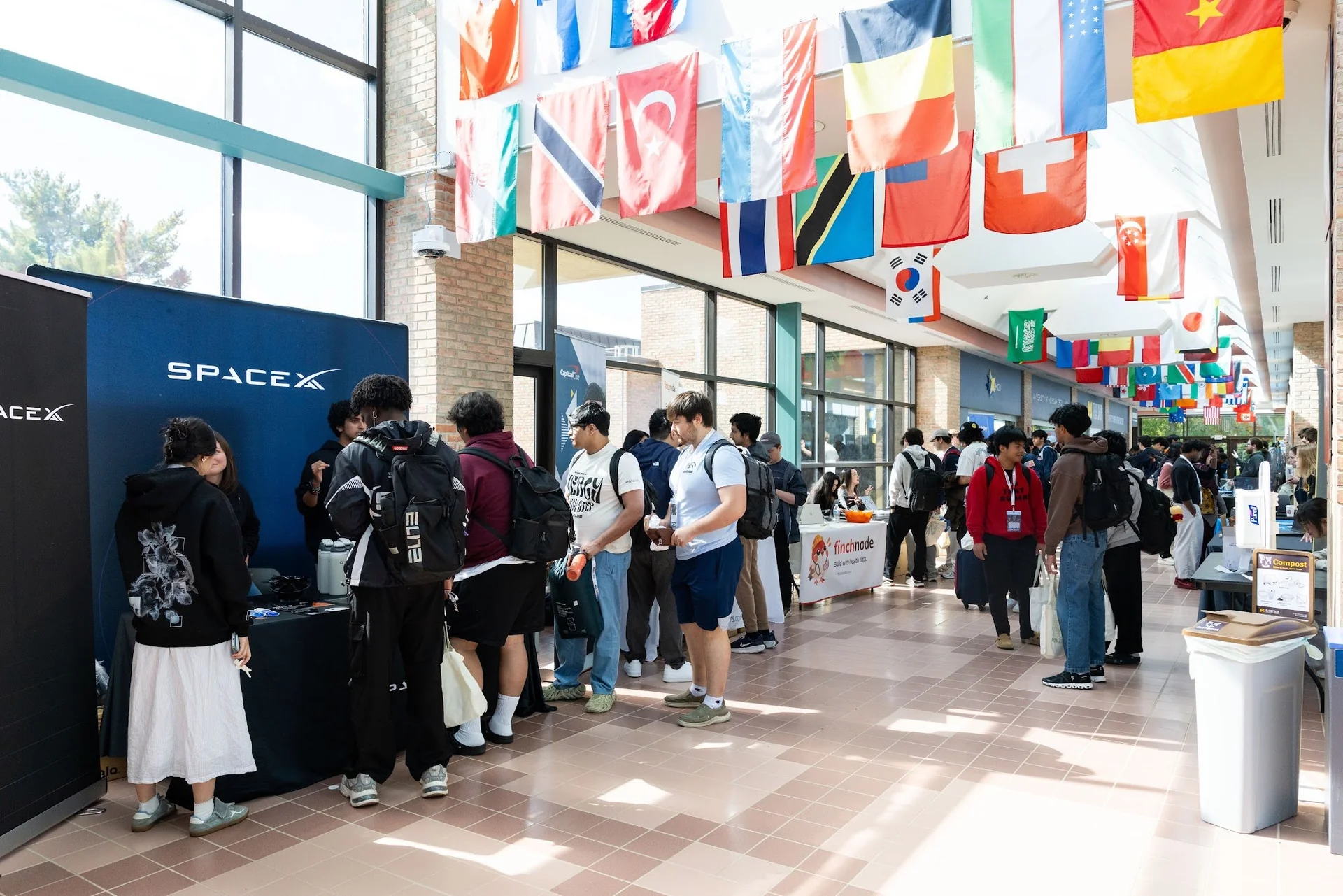
A Very Busy Hallway
Back at Pierpont Commons, that narrow hallway was packed. For the first hour or so, students were lining up at almost every sponsor table.
At ours, the recurring questions were about eligibility, previous winners, and what kinds of projects might stand out. I talked through examples from our earlier hackathon, but I didn't want to prescribe what anyone should build. Seeing where students take the technology is a large part of why we go.
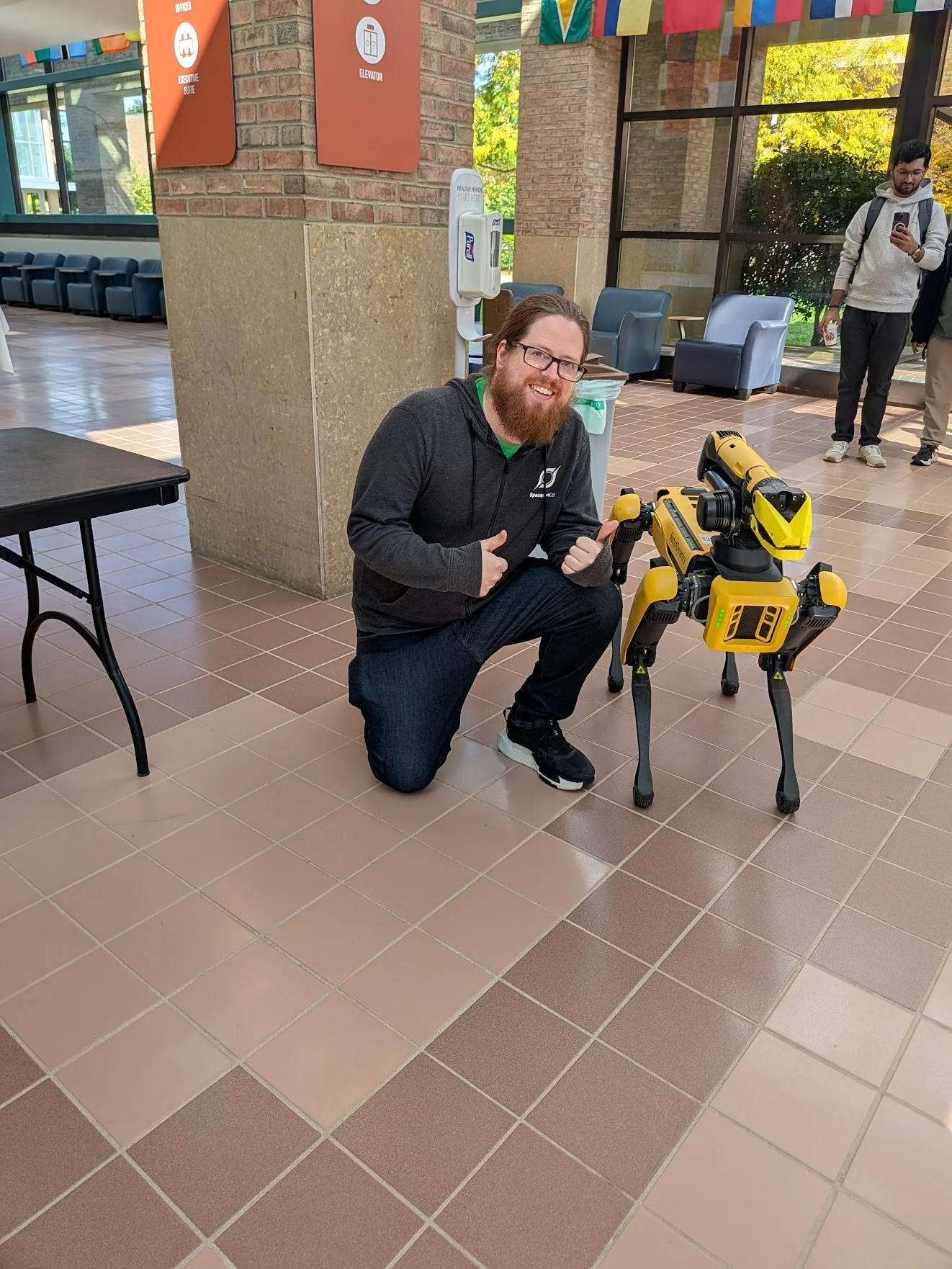
Things gradually settled down as teams headed off to build or joined workshops and activities, including Smash and speed chess tournaments. Some Michigan students also brought out Spot, Boston Dynamics' robot, and let people take pictures with it. I couldn't resist. What surprised me most was how heavy it sounded walking around.
As evening rolled around, the sponsor hallway grew quieter. We stayed at the table answering questions about Spacetime, the prize track, and redeeming the free Spacetime energy we had provided for the event. By about 10 p.m., most teams seemed deep into their projects, so we called it a night.
Sunday: Judgment Day
On Sunday, I headed to the Duderstadt Center to judge the projects. Submission logistics pushed the start back, and the judging window was tight. Before diving in, I made a quick trip downstairs to remind teams to include their public GitHub links so we could review what they had built.
We were looking for projects where Spacetime was central to the experience, not just an extra chat feature attached to an otherwise unrelated application. Demo videos were especially helpful: watching a team walk through its own project made it much easier to understand both the idea and the implementation.
The range was the best part. Teams had taken the same starting point—a backend that keeps shared state synchronized in real time—and gone in very different directions. Here are the projects we recognized.
Honorable Mention: Yaapi
Yaapi was a playful social app built around casual debates. Users could find a topic, match with someone, and jump into a live conversation. It brought some of the spontaneous social energy I associate with apps like Yik Yak, with its own debate-focused twist.
We didn't have an extra prize for the honorable mention this time, but I wanted to give the team a shout-out. Another item for next time: bring something for the projects that deserve recognition beyond the podium.
Third Place: scalpal. — $200
scalpal. explored surgical training in virtual and mixed reality. Its prototype takes a learner through a simulated patient case, with coaching and a companion dashboard following the session.
Spacetime connects the shared session state across the headset and other clients. The combination of a physical training experience and live coordination made this a particularly novel entry. It was exciting to see students take the technology somewhere so different from a conventional web app.
Second Place: Traycer — $500
Traycer tackled a familiar sight in a student dining hall: trays coming back with food still on them. The team combined camera-based observations with a live dashboard to show what was being wasted, then used a simulated cafeteria to explore changes to portions and menus.
Spacetime stores the tray observations and coordinates the shared simulation. I liked how concrete the problem was, and how naturally the idea could extend beyond a university to corporate cafeterias or large events. Understanding what people leave behind is a useful first step toward deciding what to serve next.
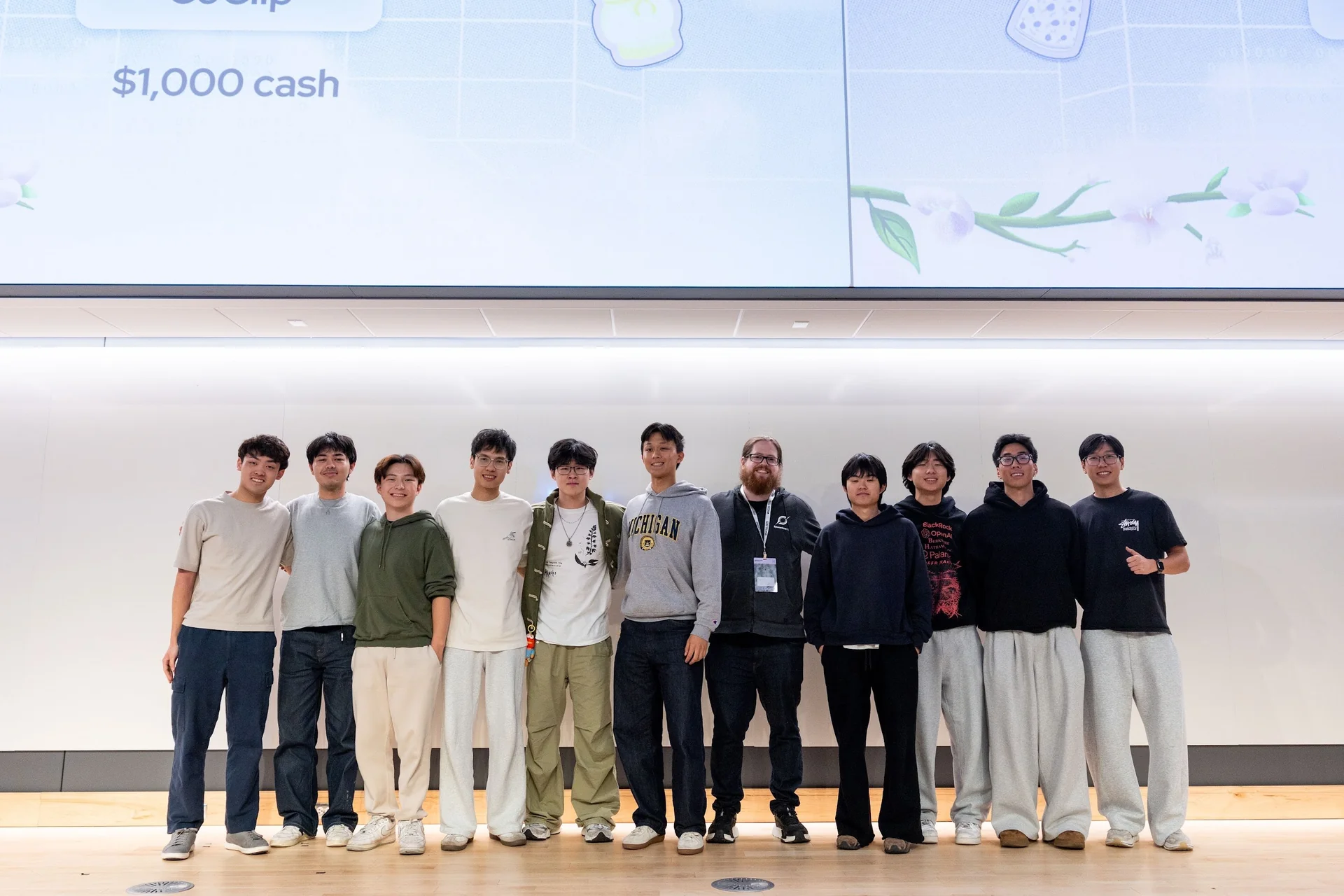
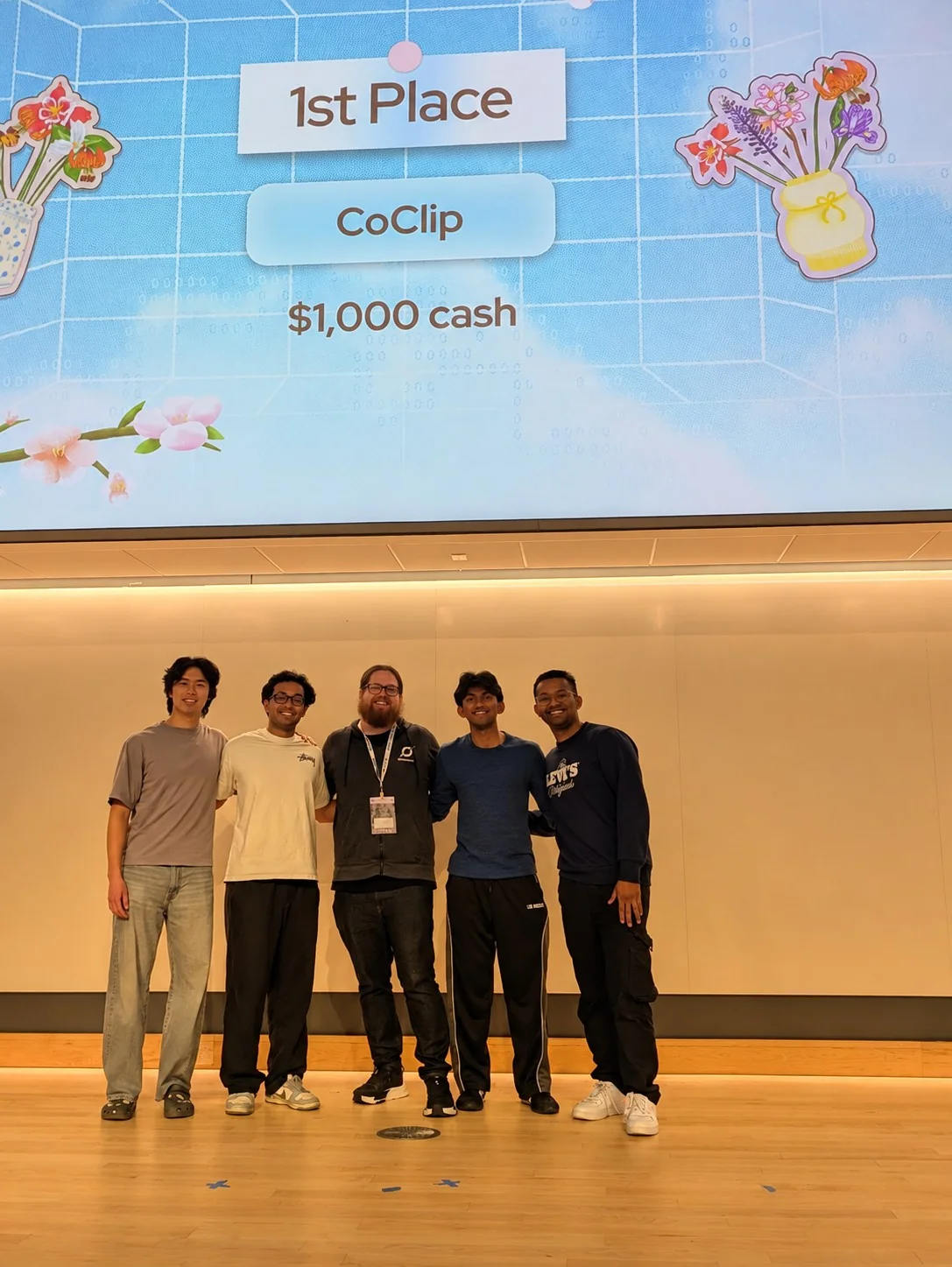
First Place: CoClip — $1,000
CoClip brought real-time collaboration to video editing. Built on the open-source OpenCut editor, it lets multiple people work on the same project at once, sharing the timeline, clips, and media instead of passing files back and forth.
Spacetime keeps that shared project state synchronized. The team also added an AI assistant that can make edits in the same workspace. The idea was immediately compelling, and seeing it come together over a weekend made CoClip our first-place choice.
Until Next Time, Ann Arbor
I had a great time at MHacks. This was one of the strongest groups of projects I've seen at a hackathon, and I hope the teams keep building on what they started. A weekend is enough to demonstrate an idea; I'm excited to see what happens when they have more time with it.
Thank you to the MHacks organizers, the University of Michigan, and everyone who stopped by our table, asked questions, and shared a demo. I'd love to be back next year—ideally with a branded tablecloth and a few more prizes in the bag.
Opening ceremony, sponsor hallway, and closing group photos courtesy of MHacks.