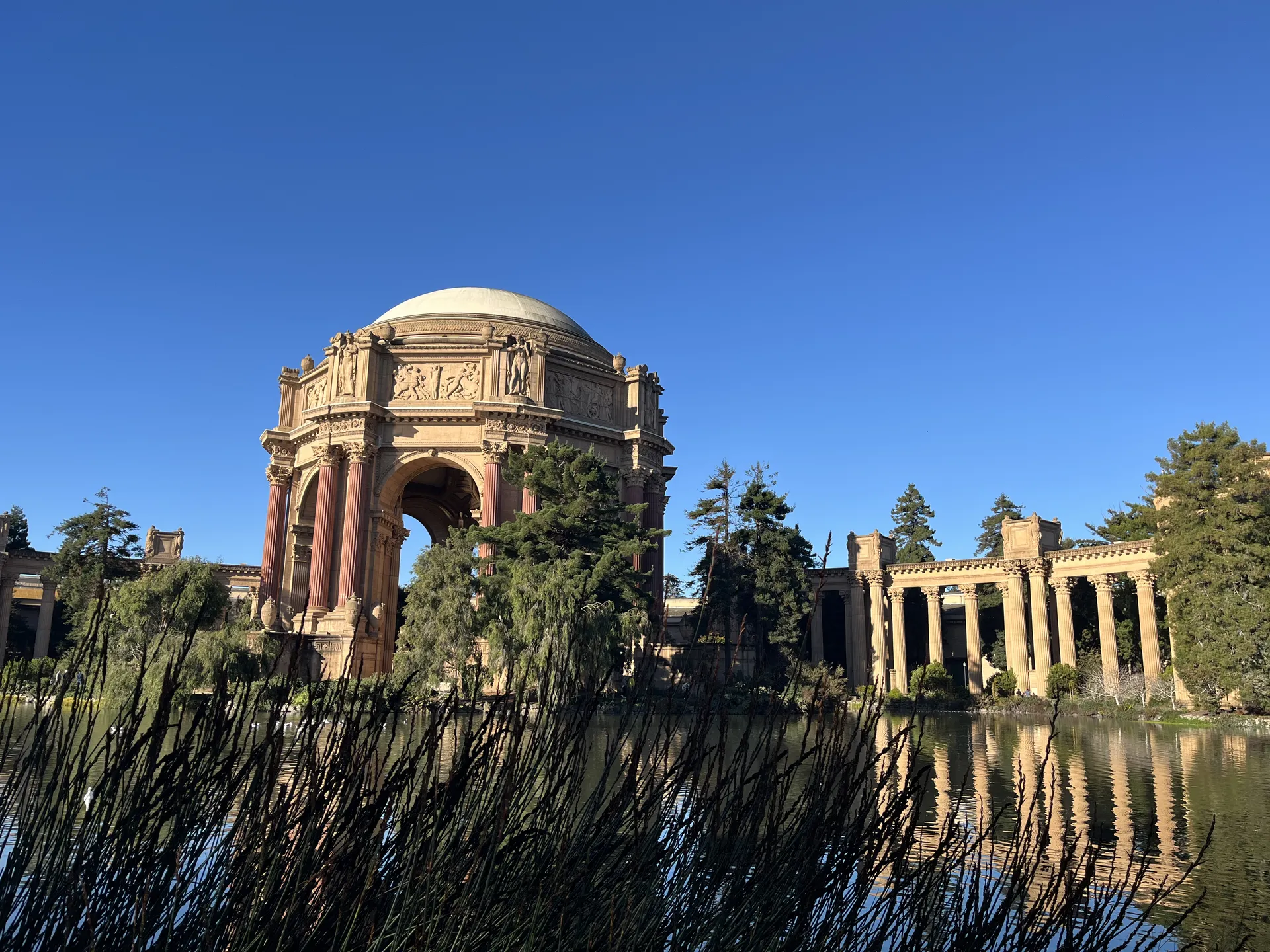
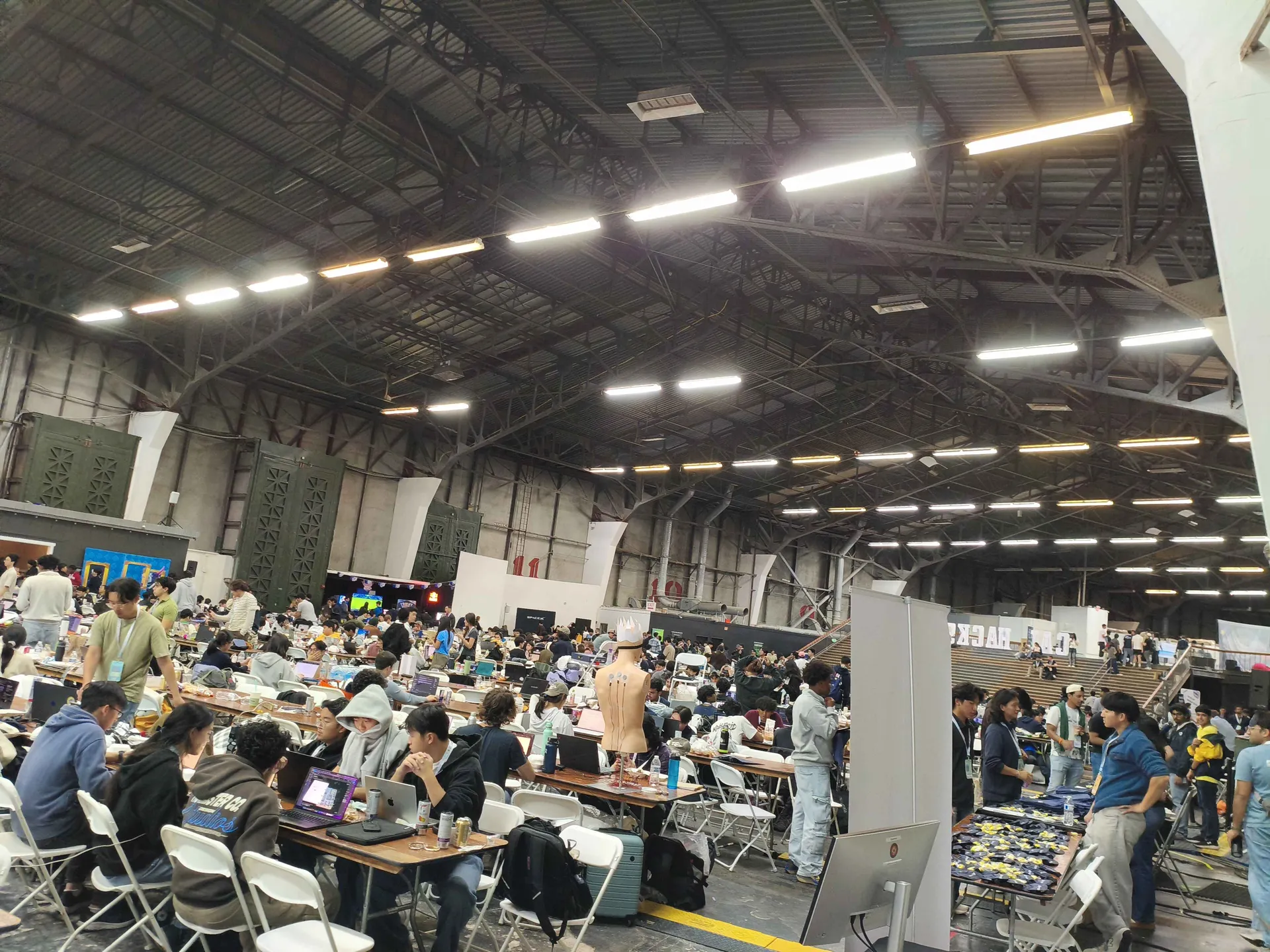
Recently the Spacetime team went to Cal Hacks 13.0 - the largest hackathon I've ever attended. About 2,500 people descended on the Palace of Fine Arts in San Francisco to spend the weekend building everything from satellite trackers to games of ping-pong. As headline sponsors we ran a prize track for the Best Use of Spacetime, and the entries were terrific. So good, in fact, that we couldn't agree on the winners and had to add extra prizes at the last minute.
We'd planned on first, second and third place prizes. When it came to judging, we couldn't whittle it down, so we threw another $1,024 in the pot and awarded four joint fourth places instead1. Seven winners, showcasing that Spacetime can be anything from an agent orchestration hub to a live finance tracker to an online game. It was such great work from the students that attended that it deserves celebrating, so for the record here are our winners:
Joint Fourth Place, In No Particular Order
Luyten
Luyten is a "close your books at the end of the month" assistant for small businesses. For a hackathon project, it has a remarkably compelling simulation of a company squaring off its month-end accounts, with agents doing the legwork and every change passing through a review gate. If they build this out fully, I can see it being very popular.
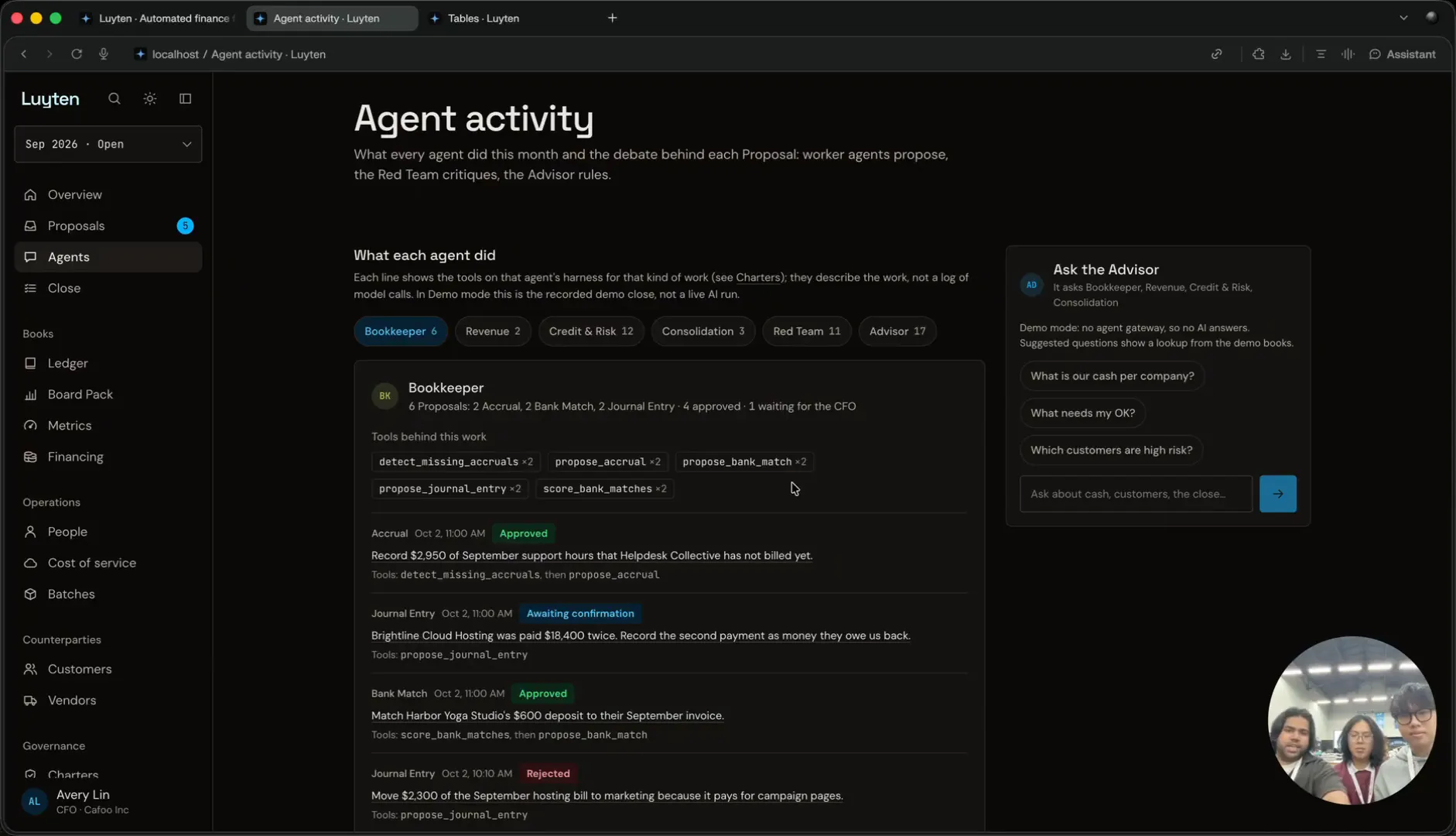
I've experimented with agentic support for my own accounting, but absolutely nothing with this polish and ambition.
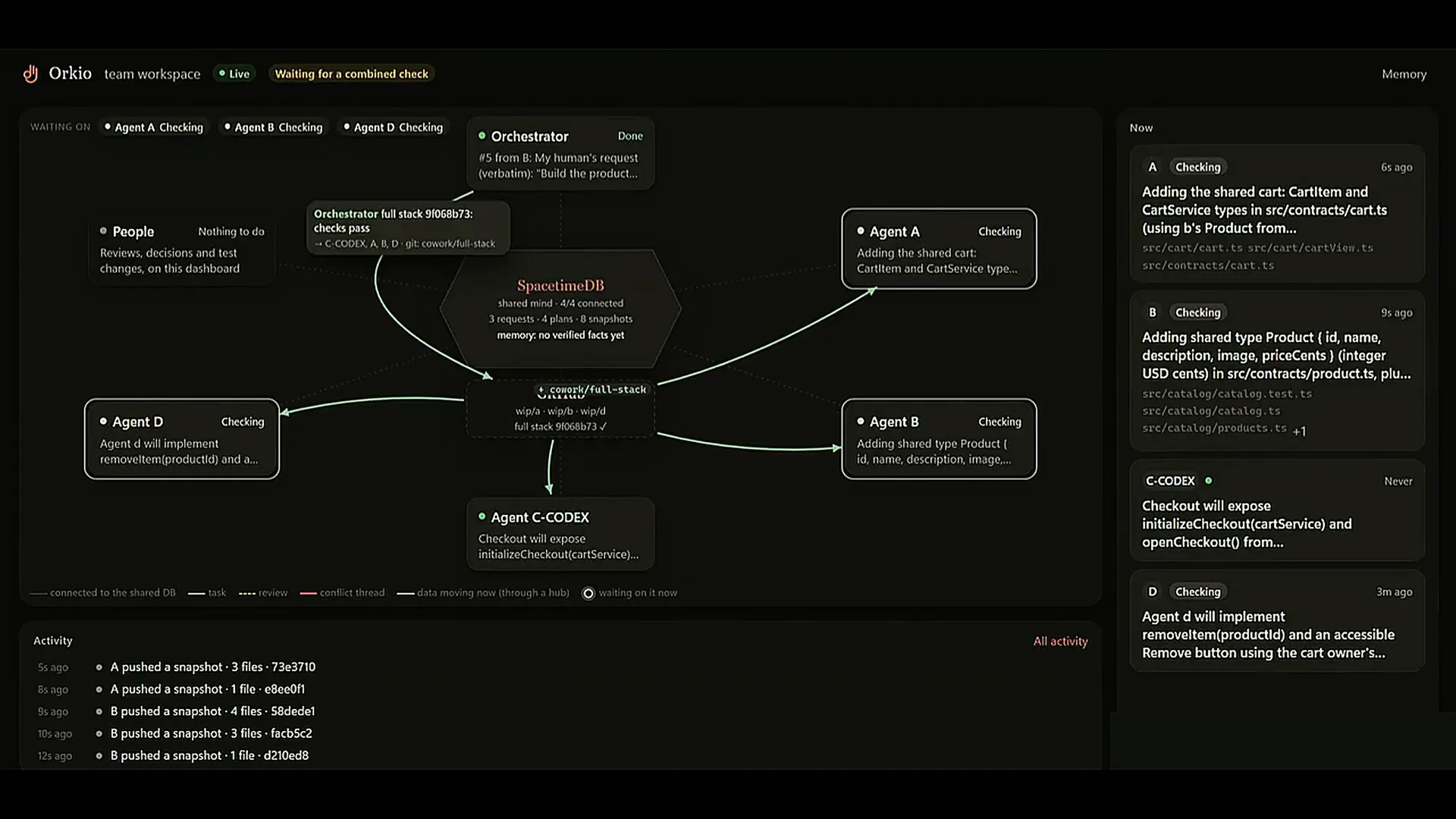
Orkio
Orkio is an agent collaboration platform where all the data flows through Spacetime. We saw a few orchestration platforms over the weekend, but Orkio stood out because it doesn't just arrange its agents in a hierarchy and tell them what to do. When two agents disagree, it connects them directly to resolve the issue, using Spacetime as a dynamic messaging hub. The conflict gets settled by the agents causing it, not by some master orchestrator who lacks the context.
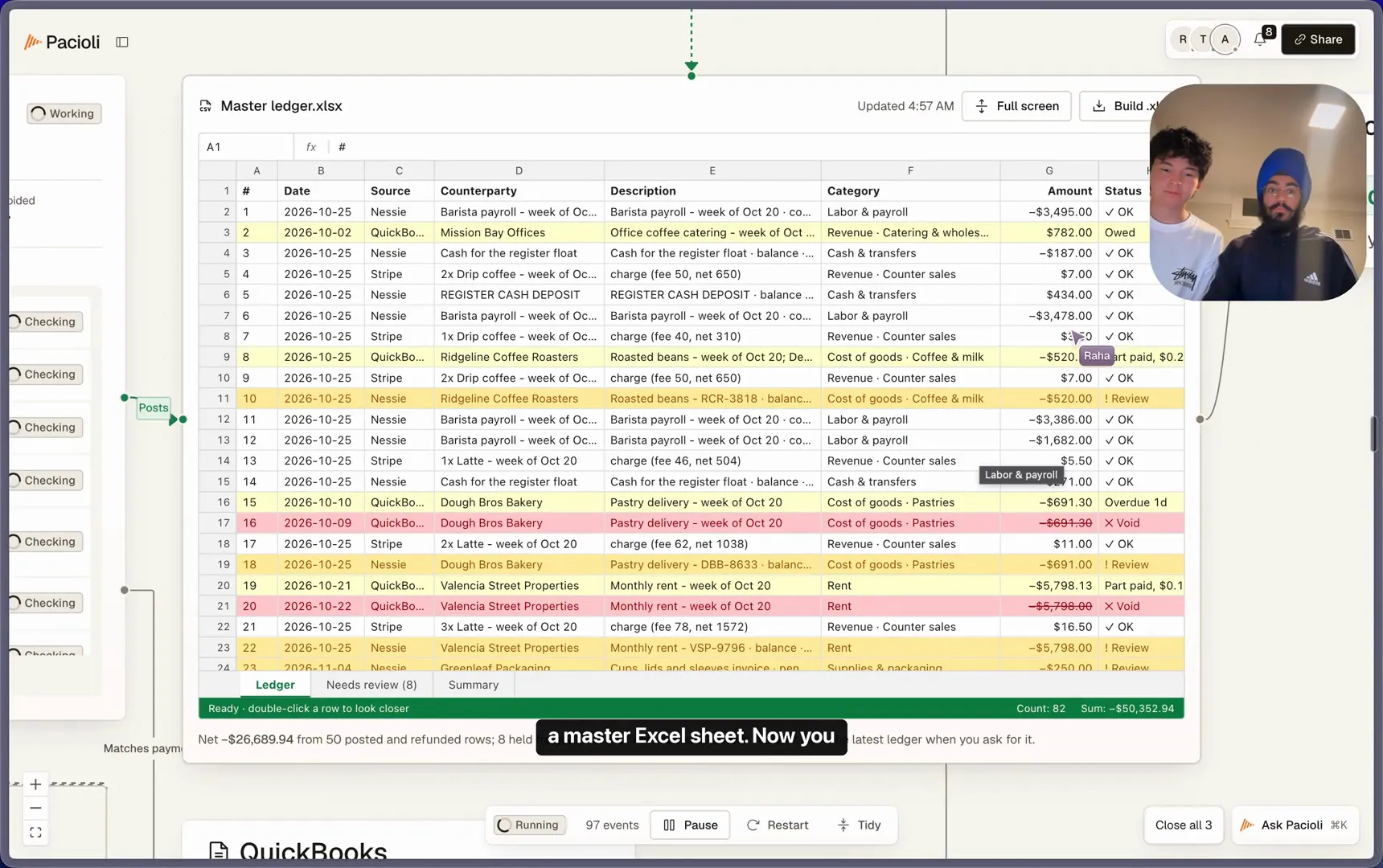
Pacioli
Pacioli was another finance app, this one focused on pulling data from your bank, Stripe and QuickBooks into Spacetime, then reconciling it all. A bookkeeper agent matches transactions to bills and explains each call it makes, and anything it isn't sure about comes to you. The bit we really liked was the visualisation: you can watch the money flowing through the business as a live graph.
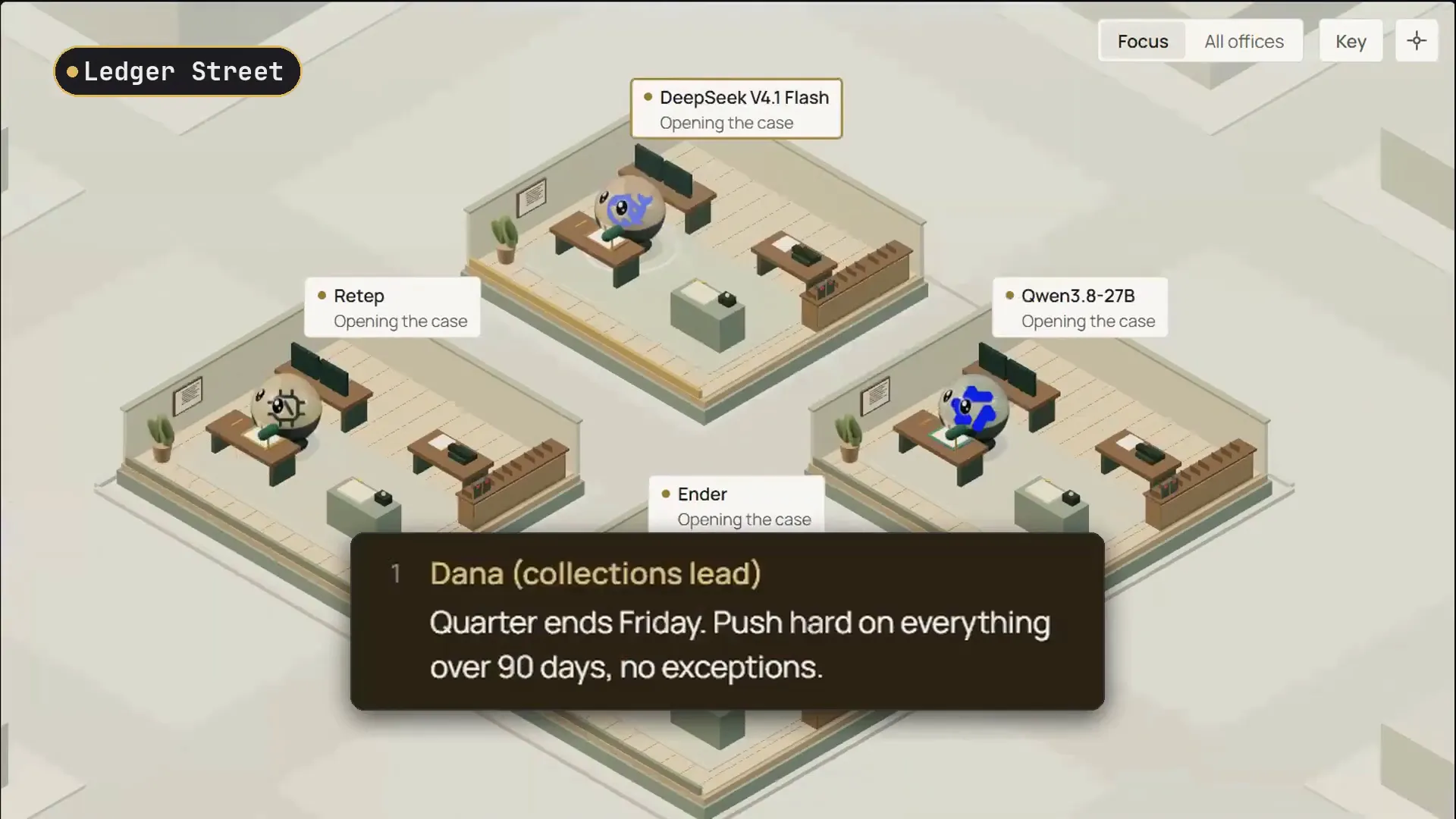
Ender's Bench
Ender's Bench is a benchmark for AI agents in the spirit of Ender's Game or a battle royale. It uses Spacetime to simulate a world where agents compete, perhaps for survival in the woods, perhaps for opportunities on a trading floor, so you can evaluate their strategies and find the best ones.
(It's also a lesson in good hackathon strategy. If you want to win a prize, target several prize tracks at once. Finance, agents and gaming all in one package was a smart idea to focus on.)
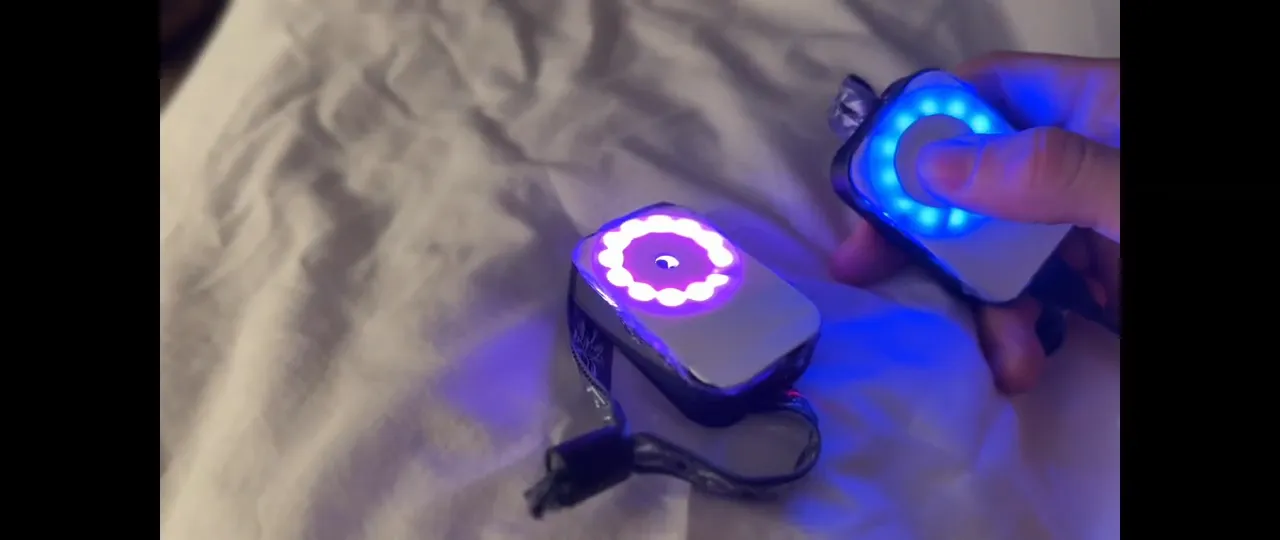
Third Place: Bandit
Bandit really caught my imagination. I tend to think of Spacetime clients running in a browser, or on a phone, or in a game. Maybe even on a Steam Deck in the middle of a field. But Bandit put the client on people's wrists. They built an ESP32-powered wristband to be worn during a concert or sports fixture. The band connects to Spacetime over a WebSocket, sends telemetry data to a reducer and receives lighting commands over a subscription. From that you can control the lighting pattern of an entire crowd. A stage manager could relight the whole stadium, including the fans, with a single update. It would be a heck of a thing to see.
There are more urgent use cases too: what if someone faints in the crowd? You could light a path through the arena straight to them, because the bands already have the location and motion data. If you have a high-performance data system that makes multi-user broadcast easy, it becomes feasible.
It's a great idea. With a bit more polish it would have claimed a bigger prize. As presented, it was a very exciting prototype.
Second Place: Rally
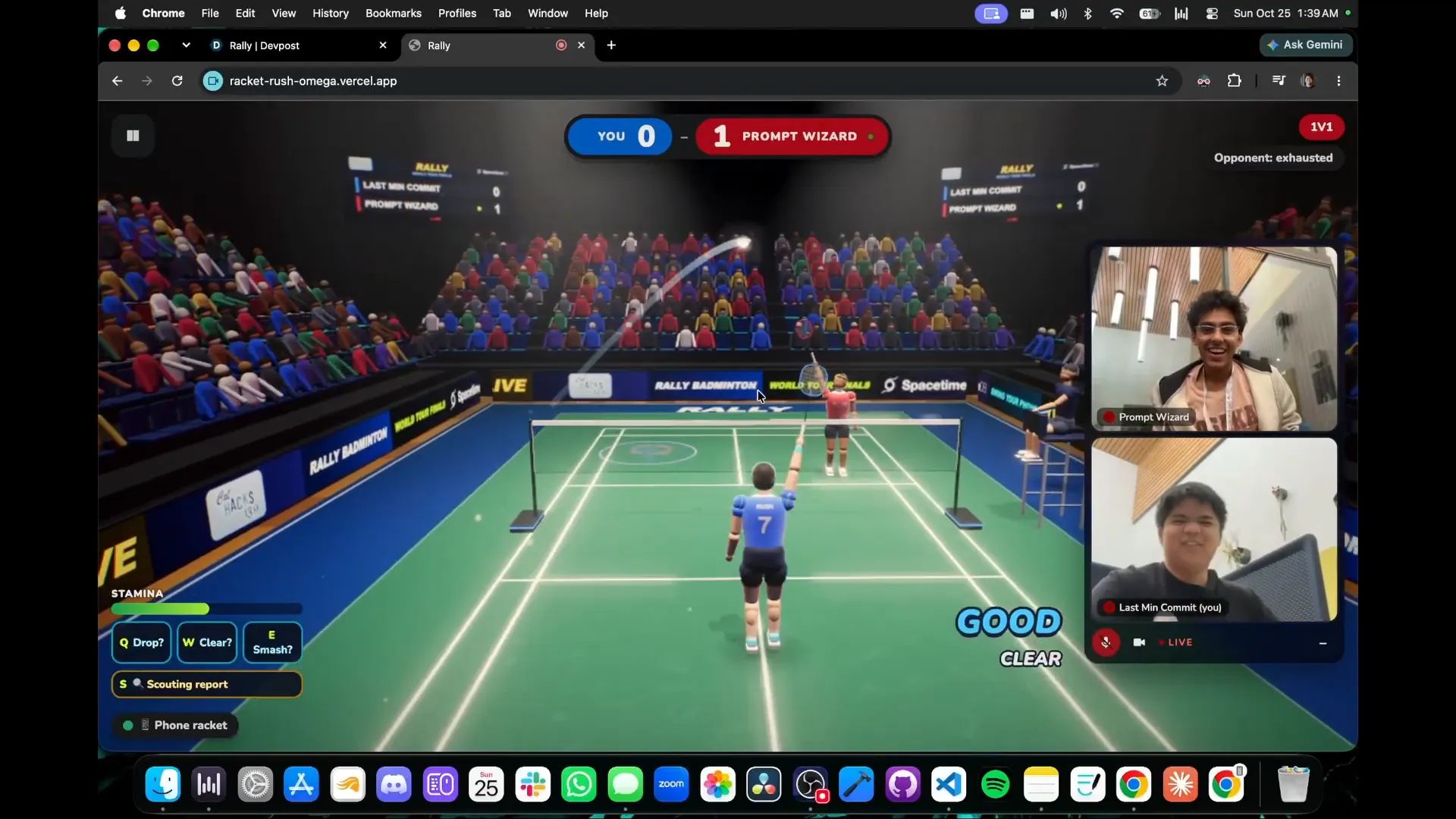
Rally was, more or less, Spacetime meets Wii Sports. Badminton, table tennis and bowling, with the simulation running inside Spacetime. Each player has two clients: a browser watching the game unfold, and their phone streaming motion data as they swing it through the air like a racket. And just to stress the system, they threw in video chat via Spacetime too.
It worked brilliantly. We played a few games and had great fun. A well-deserved second place.
First Place: Vouch
Vouch won, because it had it all. Finance, agents, a very game-like presentation, a fantastic demo, and probably the most viable business to come out of the whole weekend.
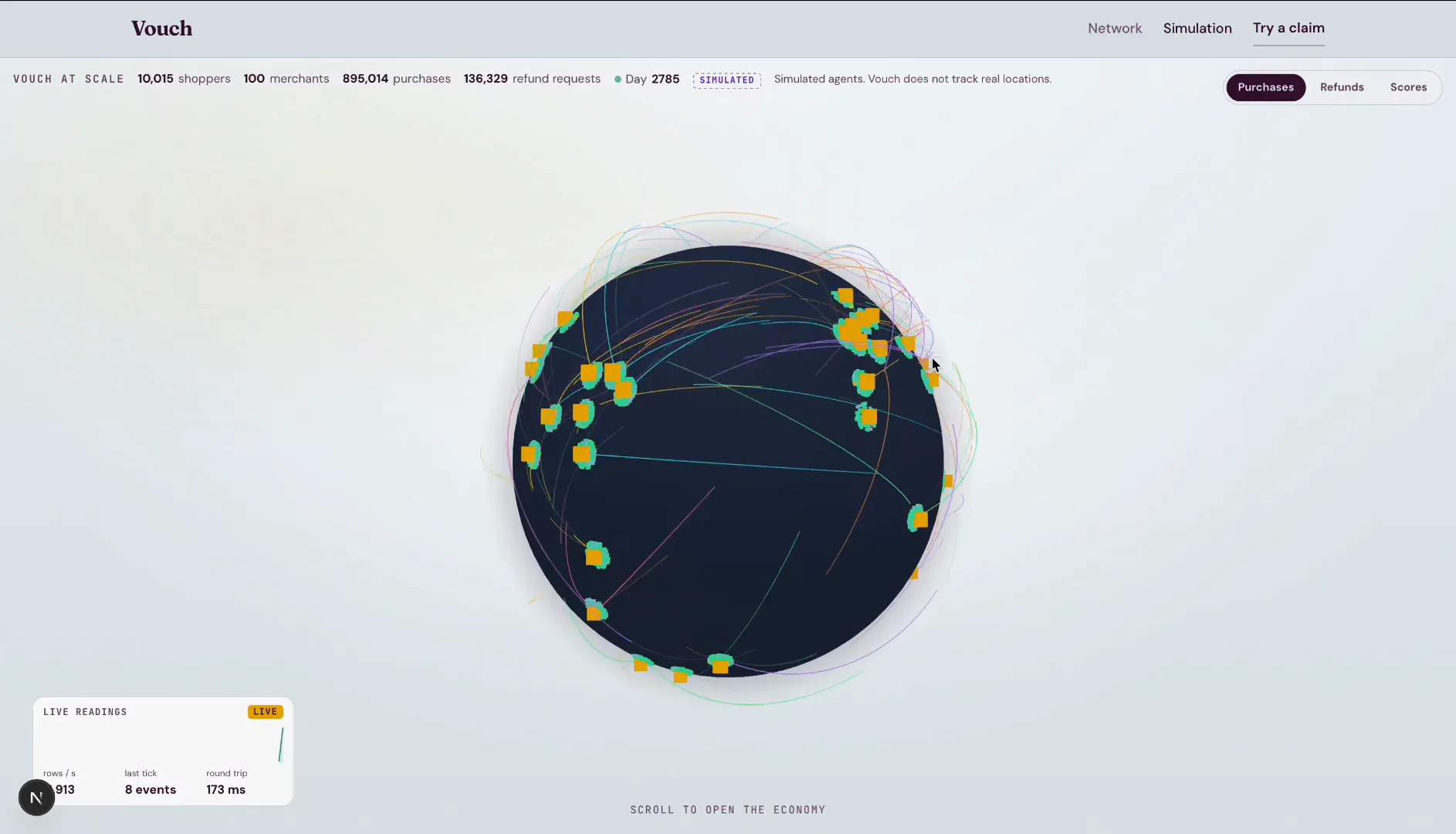
The problem they looked at is online returns. People buy things online, sometimes they send them back. It costs a fortune, but it's absolutely worth doing for good customers. It's the bad actors that are the problem. Bad customers will bleed you dry, buying clothes, wearing them once for a Saturday night, then sending them back. Vouch gives customers a claim flow where they record the item on their phone and explain the problem, then agents review the footage and judge whether the claim holds up.
To show it off, the team simulated a hundred businesses and ten thousand customers behaving in different ways, then built what amounted to a whole ledger system on top, visualising the activity and spotting fraud patterns in real time. It blended together a lot of what we love to see built on Spacetime: agents, simulation, different people interested in the same data from different sides, live visualisation, and a really polished feel throughout.
Vouch, you deserved first place. Thanks for playing.
Two Honourable Mentions
There wasn't room on even our expanded podium for everything, but two more projects deserve a shout. skyFall tracks satellites and debris re-entering the atmosphere, running its forecasts continuously on live public data. And GeonosisAI is a production line for robot skills: you register a robot, file a ticket like "put the cube in the bin, 80% reliable, $50 budget", and a line of agents works out how to teach it.
Thank You, Cal Hacks
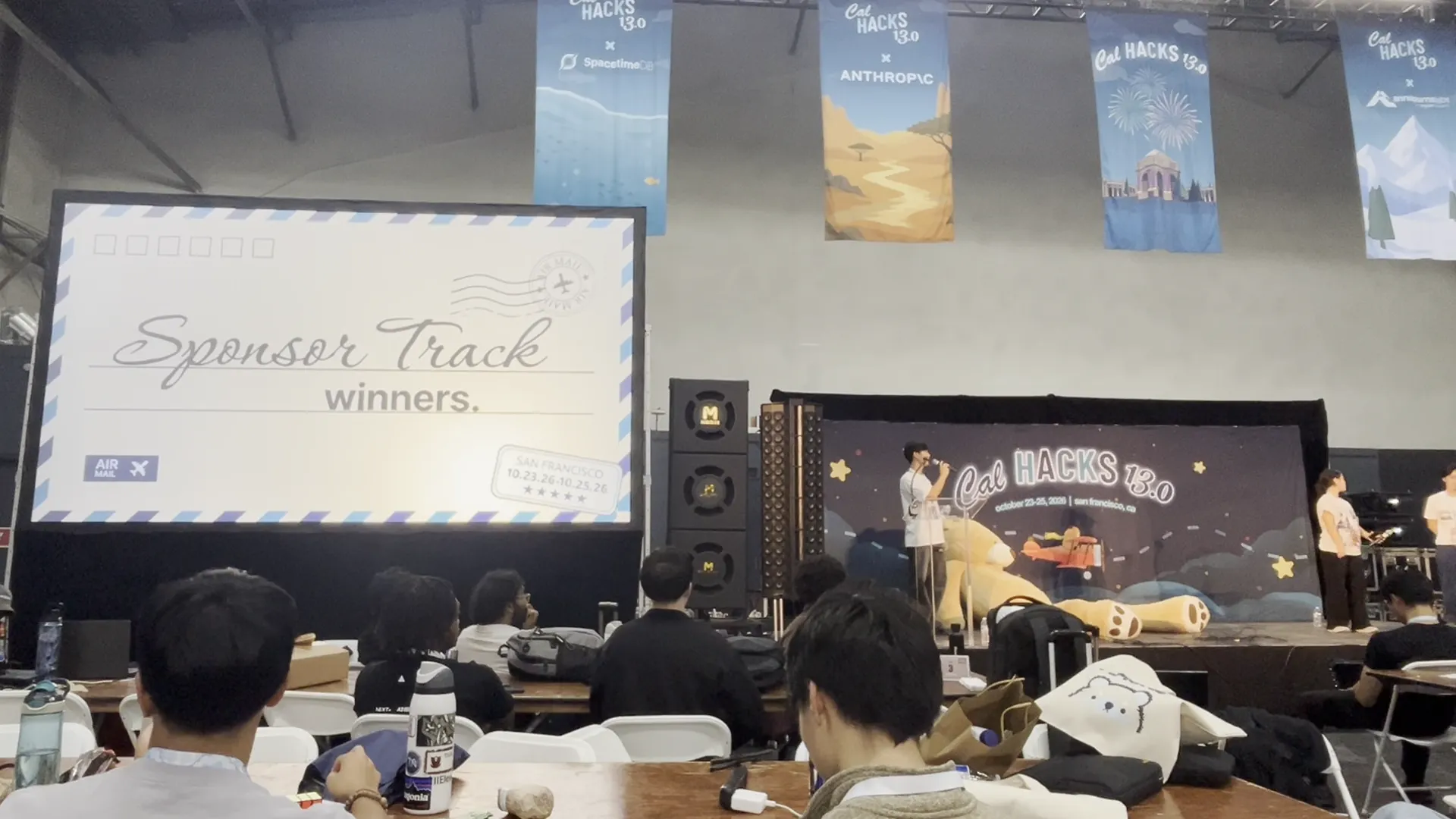
Congratulations to all our winners. And a huge thank you to the Cal Hacks organisers and all the volunteers who made it happen. The logistics of feeding, housing and wiring up two and a half thousand people for a weekend would terrify me, and you made it look easy.
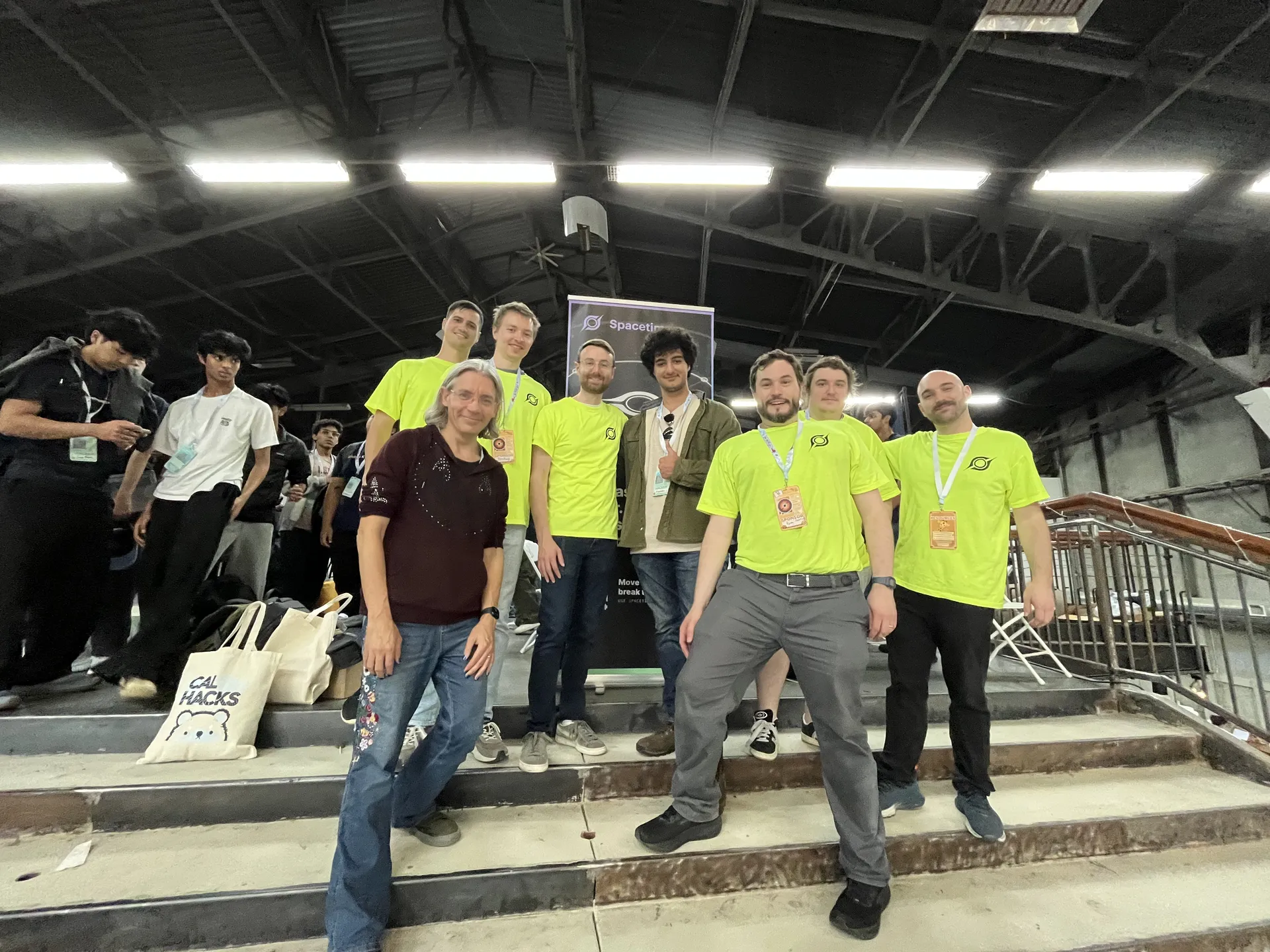
I think I speak for the whole Spacetime team when I say we had a wonderful time. It was exhausting and exhilarating, and fascinating to see what people built, both with Spacetime and with everything else on offer. AI in particular has changed what a weekend can produce. Projects are infinitely more polished than they would have been at a hackathon a couple of years ago, and it was a joy to watch so many new ideas come to life.
Footnotes
-
You may notice the prizes were $2,048, $1,024, $512 and $256. We're a database company. We couldn't help ourselves. ↩