A few weeks after MHacks, I was back at a sponsor table—this time at Cal Hacks 13.0 in San Francisco. Thousands of hackers filled the Palace of Fine Arts for a weekend of hacking, and our Spacetime team was there to help them get started, answer questions, and judge what they made.
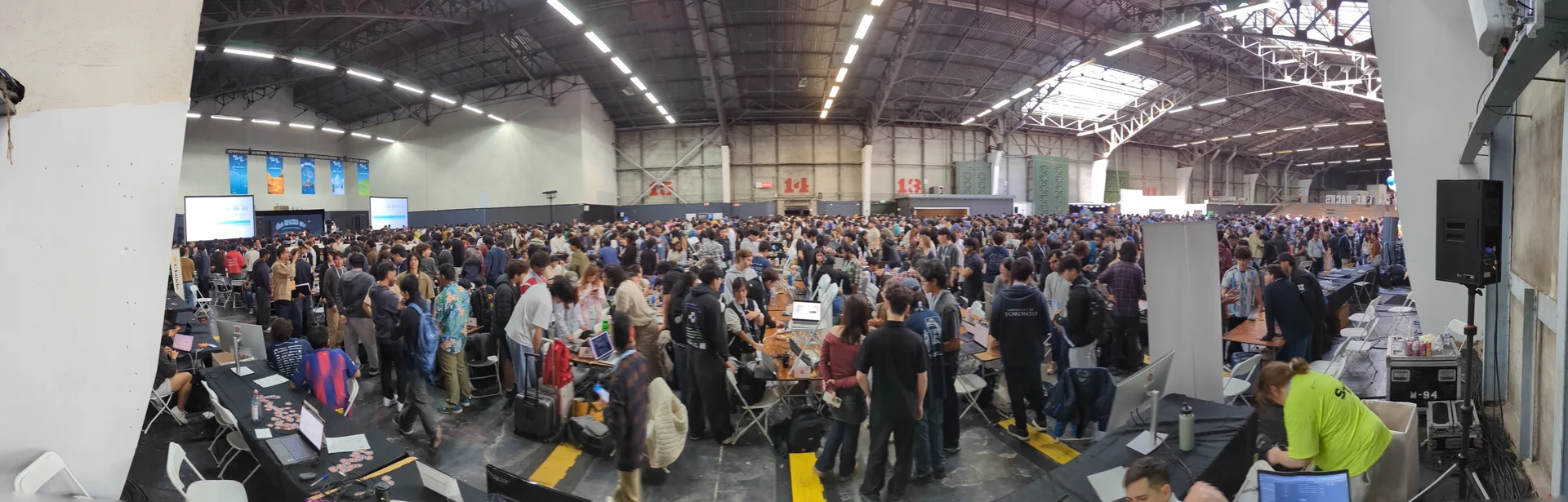
Friday: Opening Ceremony and Hacking Begins
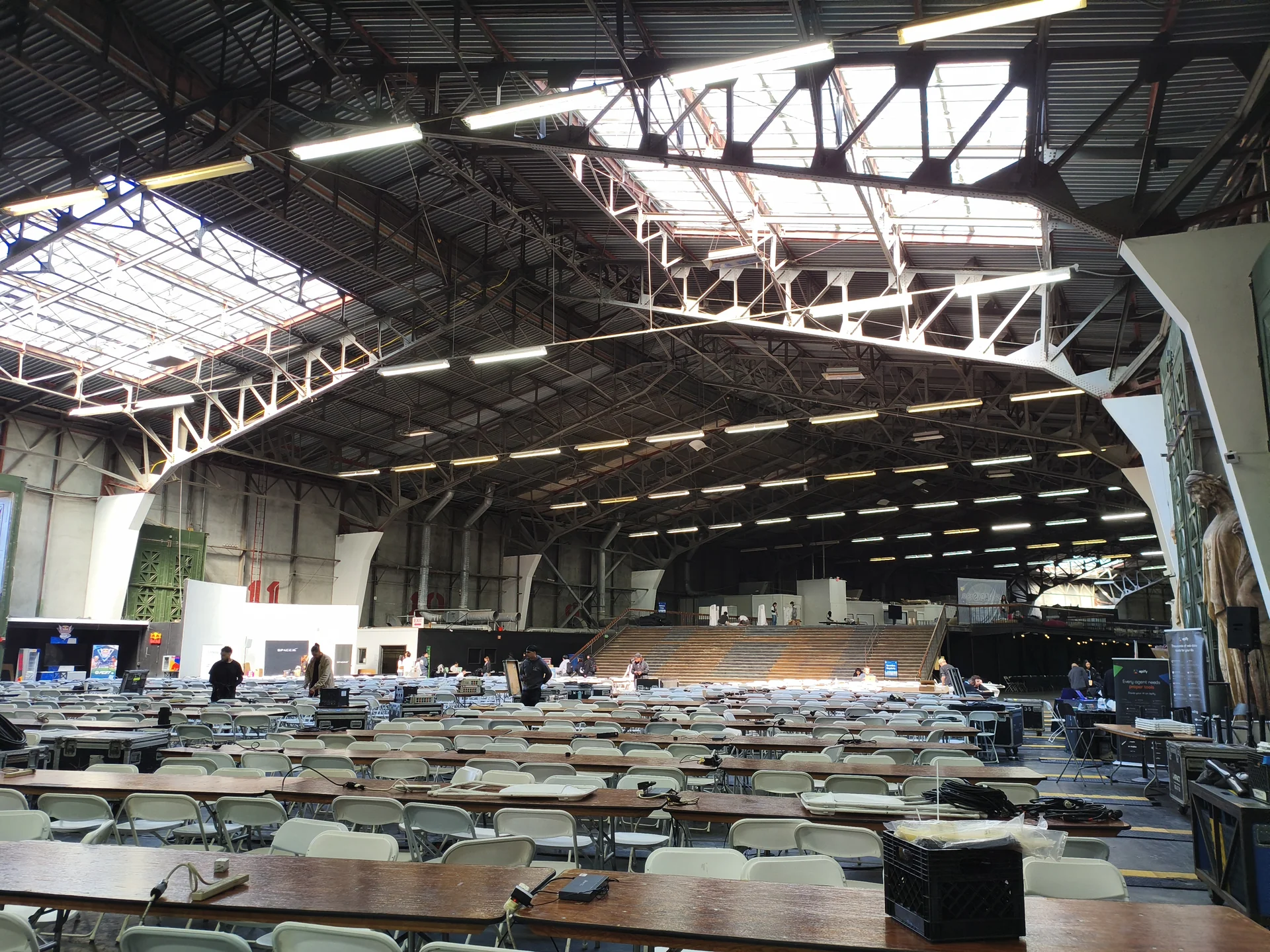
We showed up at the venue early Friday morning to set up our booth. When we arrived, the venue was empty apart from other sponsors and workers. We had three tables to fill with leaflets, stickers, displays, and signs. I set up a demo reel to run on the displays using a Raspberry Pi 5. That became a problem: the Pi has only two display outputs, and we had three displays. Thankfully, we found an HDMI splitter and got them all working.
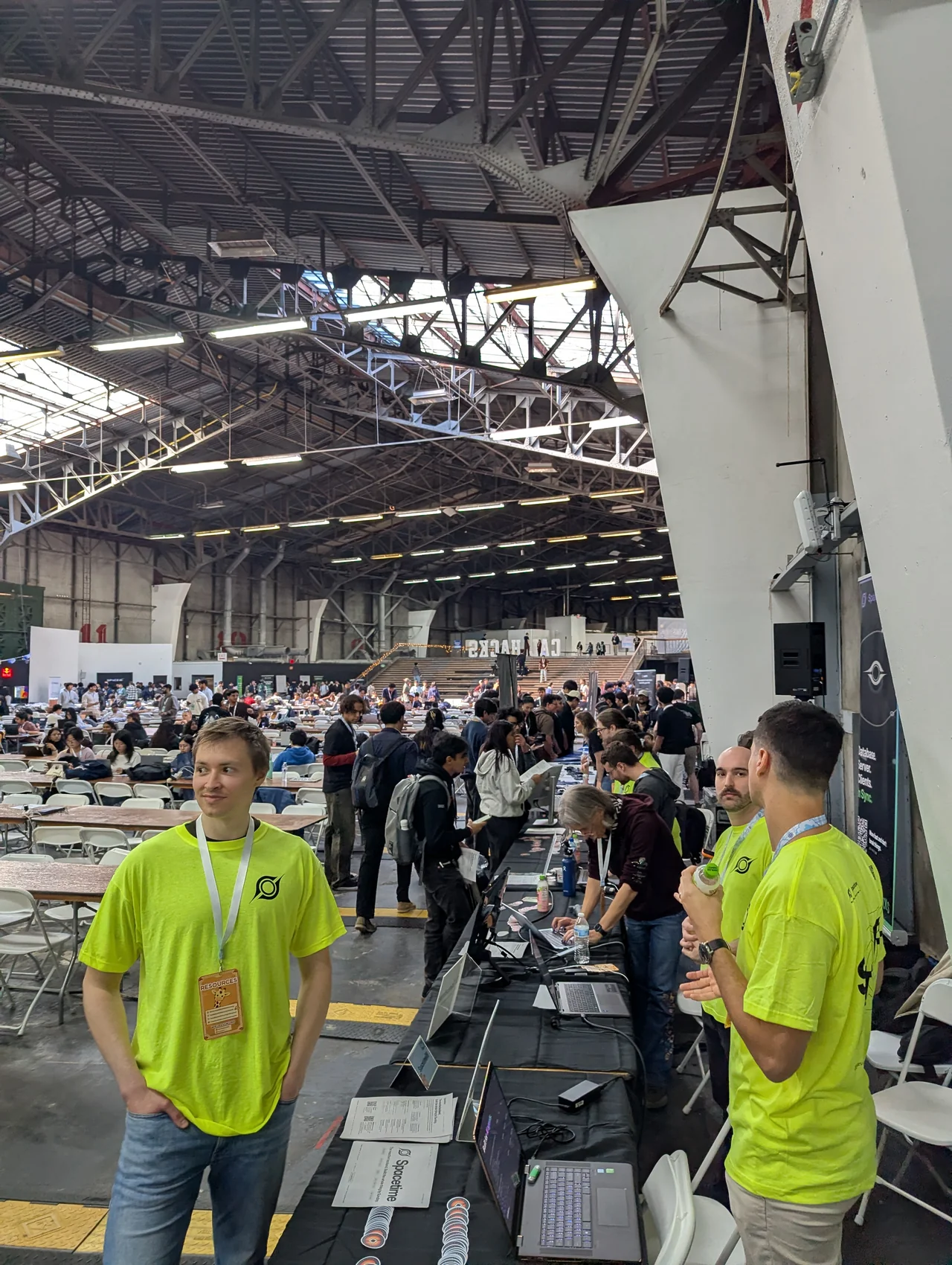
Once hackers started coming in, we gave plenty of quick introductions to Spacetime. Our booth was near the main stage, so many of them passed us on their way to the opening ceremony. Interest in Spacetime was higher than we expected. At one point, we ran out of leaflets and had to print more at a local FedEx.
The opening ceremony began with a marching band, which is a pretty effective way to make sure everyone's awake. Then the sponsors introduced their tracks. Ours were Best Use of Spacetime, for projects that used Spacetime as the main backend, and Scrabblebot, a bot-based competition we'd brought to a previous hackathon. Scrabblebot starts with six bots in each game, bidding on letters one at a time. The highest bidder adds the letter to its rack, then plays words with the letters it has won to score points.
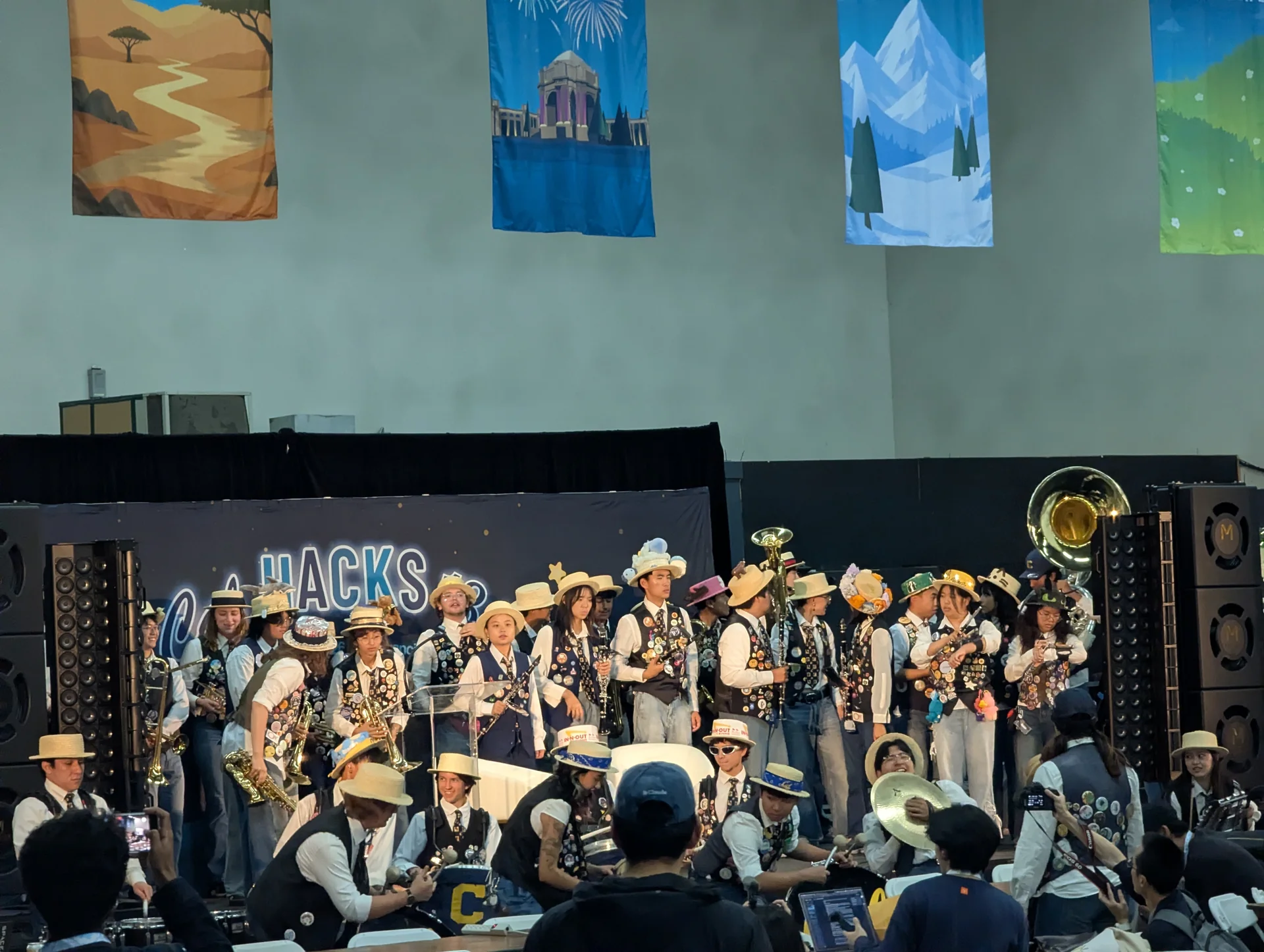
After that, teams scattered to start hacking. Some already knew exactly what they wanted to make. Others came over to ask what kinds of projects we hoped to see. I tried not to hand out a blueprint; the fun part is seeing what people with different backgrounds come up with when you give them the same tools and a deadline.
Saturday: Hacker Questions, Then Scrabblebot
Saturday was mostly a day of people building and coming back with more specific questions. The conversations moved from “What is Spacetime?” to implementation details and whether a project really met the backend requirement for our prize track. We also talked through what makes a submission easy to judge: a working demo, accessible source code, and a clear explanation of what Spacetime is doing.
I also walked around to help hackers directly. I saw a lot of cool projects, including robot arms and other robotics work. One hacker told me they wanted to use Spacetime for their project's networking and coordination, but ESP32 wasn't supported. We took that as feedback and hope to have an update in the future.
At midnight, we wrapped up the day with Scrabblebot.
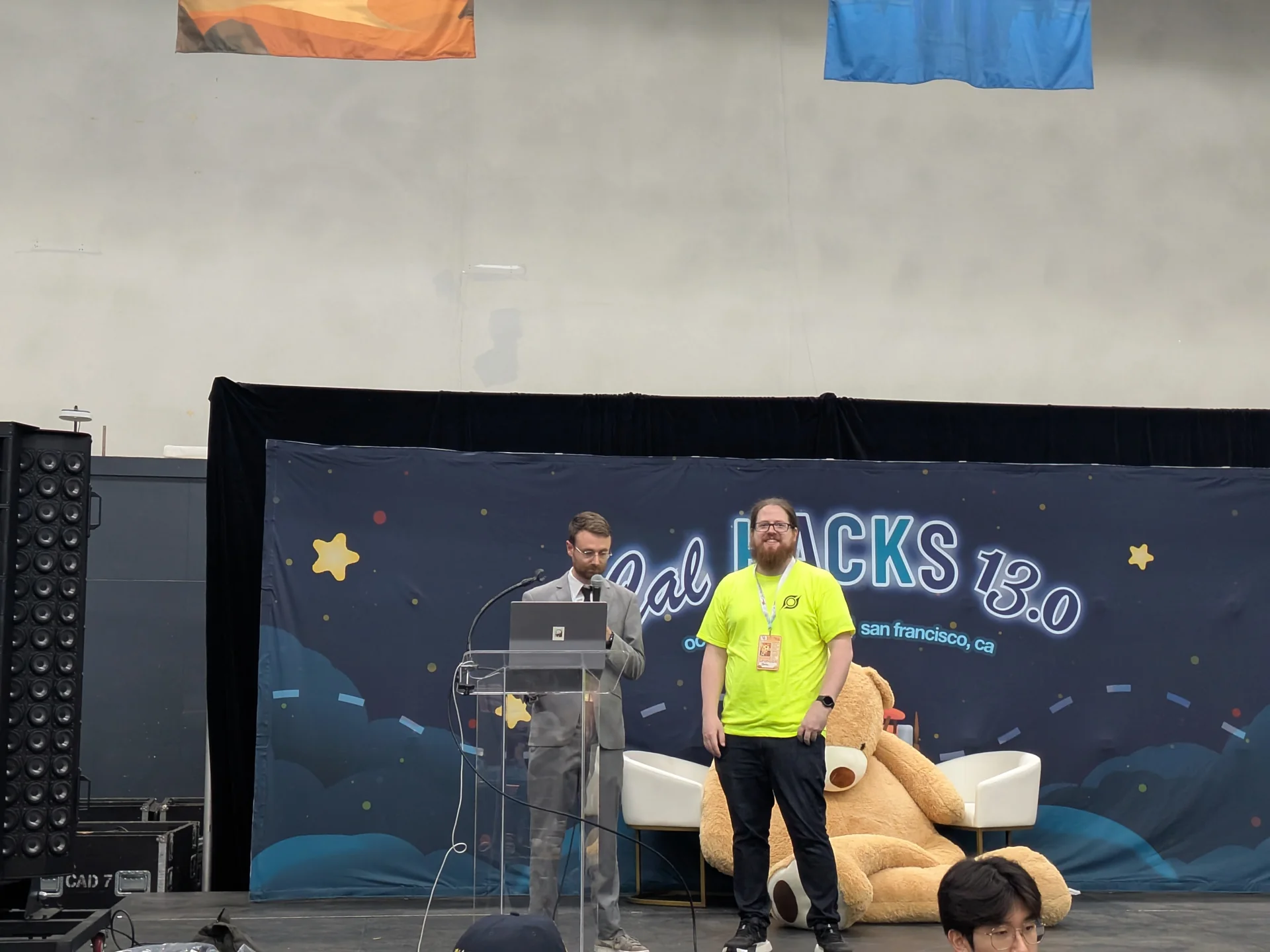
Teams could enter Scrabblebot even if they weren't competing in the Best Use of Spacetime track. Each team could submit one bot and have only one connected at a time. The competition had two phases. First, we grouped roughly 100 bots into six-bot games. The lowest-scoring bot in each game was eliminated, and we repeated that process until only six remained. In phase two, those six played together, with the lowest-scoring bot eliminated after each game until two remained. The finalists then played three championship games; the bot with the highest combined score won.
The top three bots and their prizes were:
- K-13 — $1,024
- TileShark — $512
- Waupus — $256
Sunday: The Deadline and the Demos
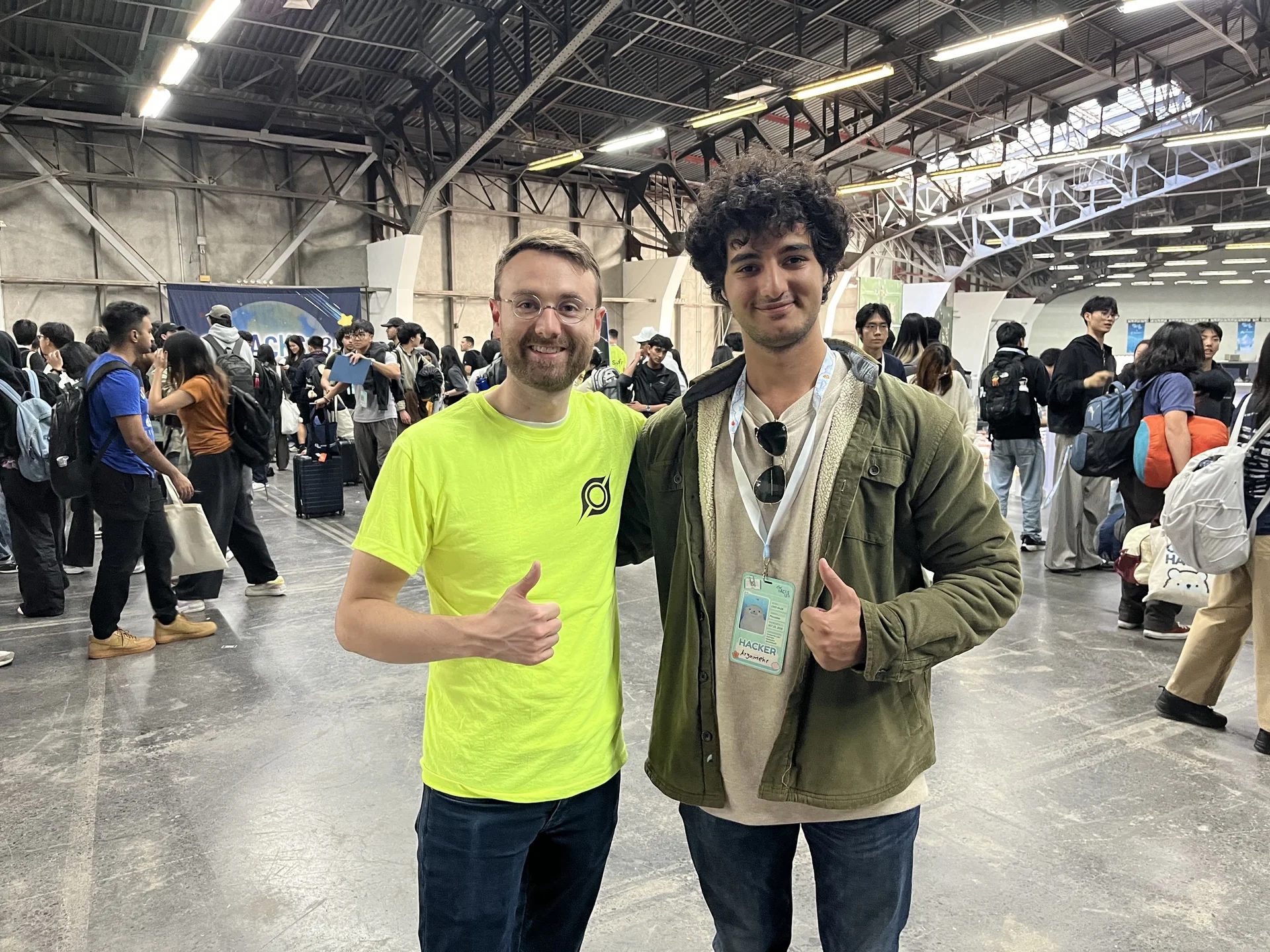
Early Sunday morning, I walked around the hall to see how teams were getting on. Some were still putting together their submission pages just hours before the deadline. I've seen that at enough hackathons to know it's normal, but it still makes me nervous on their behalf.
The thing I kept reminding teams about was the demo video. Judges have a limited window to understand a project, and a short video can show what the team actually built much faster than a page of ambitious plans. That's especially important when one submission is entered in several prize tracks. Show the working product, explain the team's contribution, and make it clear what happened during the hackathon.
Then it was our turn to watch the demos and review the code. We wanted Spacetime to be central to the project, not an extra feature bolted onto a different backend. We expected to award three places; we ended up making room for four more.
Thanks to the Cal Hacks organizers and volunteers for having us, and to everyone who stopped at our table, asked a question, wrote a bot, or showed us a project. It was a long weekend for both the hackers and our team, and I'd gladly do it again next year.
For the projects we picked—and why the podium grew—read our full Cal Hacks 13.0 winners post.